
How to Find Foundation Repair Contractors in Texas
Discover how to find foundation repair contractors in Texas with tips on vetting, comparing bids, and avoiding scams to protect your home.
By Adnan Nazir
Learn more about Foundation Repair for guides, costs, and what to expect.
Compare Foundation Repair Pros Near You

Enter your ZIP code to compare top-rated local professionals and request free quotes.
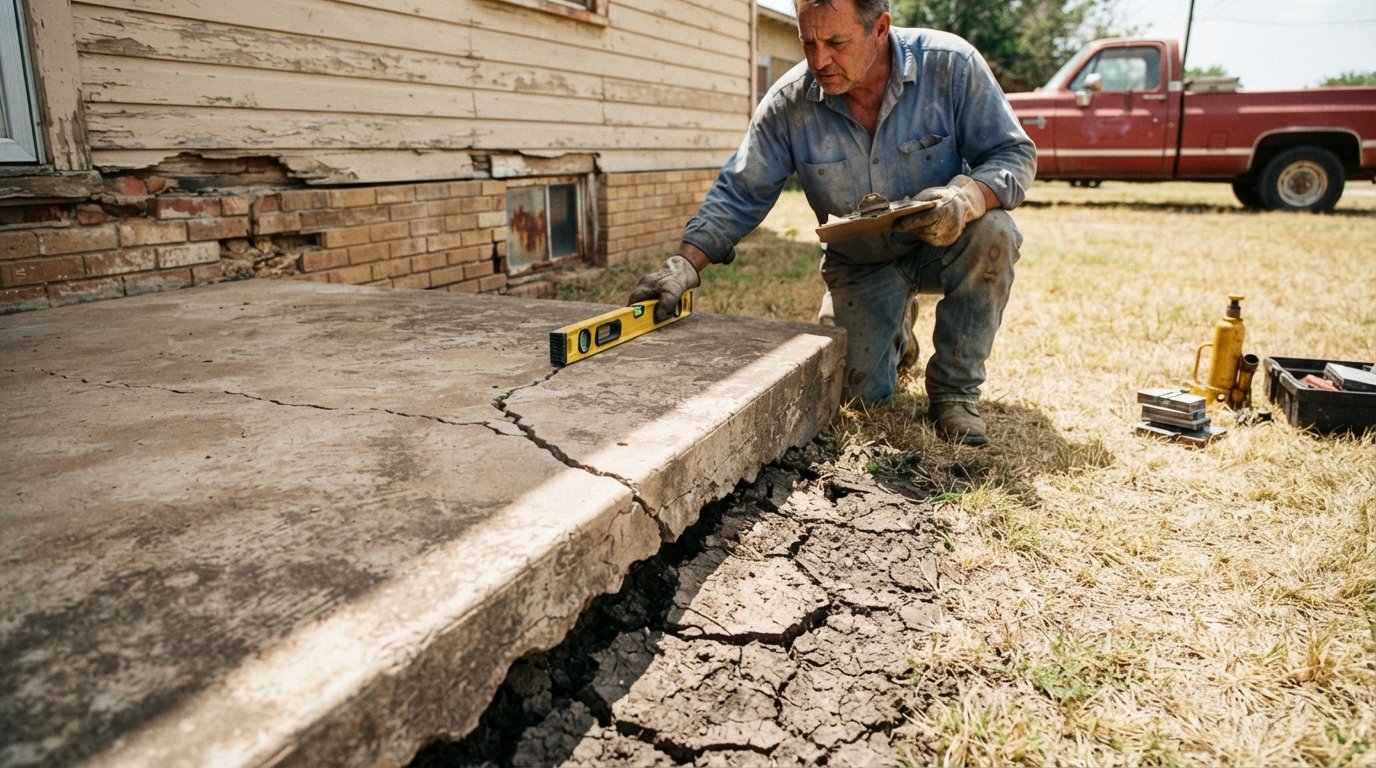
Texas soil is notorious for shifting. Expansive clay, prolonged drought, and sudden heavy rains can pull moisture out of the ground or flood it, causing your home's foundation to move, crack, or settle unevenly. If you have noticed sticking doors, cracked drywall, or sloping floors, you might be facing a serious structural issue. The fix often costs thousands of dollars, and the quality of the work determines whether your home stays safe for decades or continues to deteriorate. That is why knowing how to find foundation repair contractors in Texas is one of the most important skills a homeowner can develop, especially before an emergency turns into a full-blown crisis.
This guide walks you through the entire process, from spotting warning signs to vetting companies, comparing bids, and protecting yourself with the right contract. You will also learn how to verify licenses, check for insurance, and avoid common scams that target worried homeowners. By the time you finish reading, you will have a clear action plan and the confidence to hire a contractor who does the job right the first time.
Why Foundation Problems Are So Common in Texas
Texas sits on some of the most reactive soil in the country. The expansive clay, often called "black gumbo," swells when wet and shrinks when dry. This constant movement puts enormous stress on concrete slab foundations and pier-and-beam systems. During the summer, extreme heat bakes the ground, pulling moisture away from the soil beneath your home. In the winter and spring, heavy rains can saturate the same soil, causing it to expand rapidly. Over time, this cycle creates uneven support, leading to differential settlement.
Older homes may also have undersized footings or inadequate drainage, compounding the problem. Even newer construction can suffer if the builder did not properly prepare the soil before pouring the slab. Because of these factors, foundation repair is a major industry in the state, with hundreds of companies offering services. That variety is good news, but it also means you need to be selective. Not every company has the engineering expertise or the equipment to handle complex repairs, and some may quote you a high price for work you do not actually need.
Signs You Need a Foundation Inspection
Before you start calling contractors, you should confirm that your home actually has a foundation issue. Some signs, like a single hairline crack, may be cosmetic. Others, like a door that suddenly sticks, can indicate real movement. Walk through your home and look for the following:
- Interior drywall cracks, especially near door frames or windows, that run diagonally or follow a stair-step pattern.
- Exterior brick or stucco cracks that are wider than 1/8 inch or that see continuous growth.
- Floors that slope or feel bouncy in certain areas.
- Windows or doors that stick, jam, or no longer latch properly.
- Gaps between your walls and ceilings or between your baseboards and the floor.
- Visible separation where the foundation meets the exterior siding.
If you notice any of these, do not panic. A professional inspection can determine whether the movement is active or old and stable. Many foundation repair companies in Texas offer free or low-cost inspections, but you should treat those with some caution. A salesperson who performs the inspection may have an incentive to find problems. Instead, consider hiring a licensed structural engineer for an independent evaluation. An engineer does not sell repairs, so their report is more objective. The cost, typically $300 to $800, is worth it if you want a clear picture before you negotiate with contractors.
How to Vet Foundation Repair Contractors in Texas
Once you have a professional report or a strong suspicion that you need repairs, it is time to build a list of candidates. The state of Texas does not require a specific license for foundation repair contractors, but it does require a Texas Residential Construction License for work over a certain value, unless the contractor is exempt as a homebuilder. More importantly, you should look for companies that employ licensed professional engineers or that work under the supervision of one. A reputable company will be happy to provide proof of insurance, including general liability and workers' compensation, and they should have a physical address and a verifiable phone number.
Start your search by asking for recommendations from neighbors, friends, and real estate agents who have dealt with foundation issues. Then, check online reviews on Google, Yelp, and the Better Business Bureau. Look for patterns rather than isolated complaints. A company with dozens of reviews and a consistent rating of 4.5 stars is generally safer than one with only a few glowing testimonials. You should also verify their standing with the Texas Department of Licensing and Regulation (TDLR) if they claim to hold a license. Finally, always ask for references and, if possible, visit a recent job site to see the quality of their work and how they treat the homeowner.
Questions to Ask Before You Hire
When you contact a foundation repair company, treat the initial call as an interview. You are the one in control, and a good contractor will welcome your questions. Prepare a list and take notes during the conversation. Here are the most important ones to ask:
- How long have you been in business in Texas, and how many foundation repairs have you completed in my area?
- Will a licensed professional engineer be involved in the design or inspection of my repair?
- What repair methods do you recommend, and why? Do you offer a choice between slab piers and helical piers?
- What warranties do you provide, and are they transferable if I sell my home?
- Can you provide a detailed written estimate that includes the number of piers, the depth, and the type of material?
- How will you protect my landscaping, driveway, and interior floors during the work?
- Will you handle the necessary permits, and who is responsible for any damage to underground utilities?
Listen carefully to the answers. A vague response or a contractor who pressures you to sign immediately is a red flag. The best companies will explain the process in plain language, show you examples of similar repairs, and give you time to compare bids. Remember, you are not just buying a service; you are buying a long-term solution that protects your most valuable asset.
Comparing Bids: What to Look For
After you have narrowed your list to two or three reputable contractors, ask each one to provide a detailed, written bid. Do not accept a verbal estimate or a one-page quote with no breakdown. A proper bid should include the number of piers, the depth they expect to reach, the type of pier (e.g., pressed concrete, steel push piers, or helical), the method of lifting, and the cost of any additional work such as slab stitching or mudjacking. It should also list the warranty terms, the estimated start and completion dates, and the payment schedule.
Beware of bids that are significantly lower than the others. Extreme lowball offers often mean the contractor plans to use fewer piers than necessary, skip important steps, or cut corners on materials. Conversely, a very high bid is not always a sign of better quality. Look for a bid that is within 10 to 15 percent of the median, and read the fine print carefully. If a contractor refuses to put something in writing, walk away. You need a contract that protects you if the repair fails or if the crew damages your property.
Understanding the Repair Process and Costs
Foundation repairs are not cheap. In Texas, the average cost for a residential foundation repair ranges from $2,500 to $10,000, but complex jobs can exceed $20,000. The final price depends on the size of your home, the type of foundation (slab vs. pier-and-beam), the number of piers required, and the accessibility of your property. Most contractors use push piers or helical piers to transfer the load of your home to stable soil or bedrock. The process involves digging holes around the perimeter, driving steel piers into the ground until they reach load-bearing strata, and then using hydraulic jacks to lift the foundation back to its original level.
Interior repairs, such as installing additional support beams or leveling a sagging floor, add to the cost. You may also need to address drainage issues, such as poor grading or broken gutters, which can cause future movement. Many contractors offer financing, but be careful with high-interest loans or long-term payment plans. If you can save up and pay cash, you often get a discount. If you need financing, compare the annual percentage rate (APR) with other options, such as a home equity loan or a personal line of credit.
Red Flags and How to Avoid Foundation Repair Scams
Unfortunately, the foundation repair industry has its share of unscrupulous operators. Some companies send aggressive salespeople who claim your home is about to collapse and pressure you into signing a contract that day. Others quote a low price, then tack on unexpected fees once the work begins. To protect yourself, never sign a contract under pressure, and always get at least three estimates. Be wary of companies that require a large upfront deposit, typically more than 10 percent of the total cost, or that ask you to pay in cash. Legitimate contractors have established business relationships with suppliers and do not need your money to buy materials.
Also, check to see whether the company has any pending complaints with the Better Business Bureau or the Texas Attorney General's office. Search for the company name plus the word "lawsuit" or "complaint" to see if there are patterns of unresolved issues. A single complaint is not disqualifying, but multiple complaints about the same problem, such as failure to honor warranties, should send you elsewhere. Finally, ask for proof of insurance directly from the insurance company or agent, not just a certificate that the contractor prints out. A quick phone call can confirm that their policy is active and covers the type of work you are hiring them to do.
Working With Your Contractor: What to Expect
Once you have selected a contractor and signed the contract, you should establish a clear line of communication. Ask who will be the project manager and how you can reach them during the repair. Before the crew arrives, take photos of your interior and exterior, including any existing cracks or damage. This documentation protects you if new damage appears during the work. Move valuable items away from the walls and remove any furniture that could obstruct the repair areas. The contractor should protect your floors and landscaping with plywood or plastic sheeting, and they should be responsible for cleaning up at the end of each day.
During the repair, you may notice some vibration or noise, but severe shaking or damage to your walls is not normal. If you see anything that concerns you, stop the work and call the project manager. After the piers are installed, the contractor will typically perform a final elevation check to ensure your foundation is level within acceptable tolerances. Ask for the engineer's report or the final survey, and keep it with your home records. This document is valuable if you ever sell your home or need to make a warranty claim.
Preventing Future Foundation Problems
Repairing your foundation is only half the battle. To keep it from moving again, you need to address the causes of the problem. The most important step is to maintain consistent moisture in the soil around your home. During dry spells, water your foundation regularly, but not too much, because overwatering can cause its own issues. A good rule of thumb is to keep the soil moist to a depth of 6 to 8 inches, but avoid standing water. You can use a soaker hose placed about 12 inches from the foundation, and run it for about 30 minutes, two to three times a week, depending on the weather.
Proper drainage is equally critical. Ensure that your gutters are clean and that downspouts direct water at least 5 to 10 feet away from the house. The ground should slope away from the foundation, and any low spots that collect water should be filled with compacted soil. If you have large trees near the house, consider installing a root barrier or consulting with an arborist to manage the root system. Tree roots can extract significant moisture from the soil, causing uneven settlement. Finally, check the condition of your plumbing regularly. A leaking underground pipe can saturate the soil under a slab, leading to voids and eventual collapse.
Why You Should Act Now, Not Later
Foundation problems do not fix themselves. Small cracks can widen, and a slight slope can become a major structural hazard. Delaying repairs often increases the cost, because the damage spreads to your framing, drywall, and even your roof. In extreme cases, a failed foundation can make a home uninsurable or unsellable. On the other hand, addressing the issue promptly protects your investment and gives you peace of mind. A properly repaired foundation can last for decades, and most quality contractors offer warranties that cover both labor and materials for 10 to 25 years.
If you are still in the early stages and just want to understand your options, you can start by reading our guide to foundation repair contractors serving Texas, which breaks down the common methods and how to choose a provider. Then, take the first step by scheduling an inspection with a licensed professional. Remember that you do not have to hire the first company that gives you a quote. The more you know, the better your decision will be.
The Value of a Thorough Hiring Process
Finding the right foundation repair contractor in Texas is not a task to rush. Your home is likely your largest financial asset, and the quality of the repair affects its safety, stability, and resale value. By following the steps in this guide, you can avoid the common pitfalls that lead to shoddy work and wasted money. You will also be in a stronger position to negotiate a fair price and to hold the contractor accountable if something goes wrong.
One additional resource that can simplify your search is a home improvement referral platform like 180Remodel, which connects homeowners with vetted professionals for a range of services, including structural work. While they are not a foundation repair company themselves, they can help you find contractors in your area who meet certain standards. Always do your own due diligence, but using a platform can save you time and give you a starting point for your research.
In the end, the goal is to find a contractor who is transparent, experienced, and willing to stand behind their work. Ask questions, compare bids, and do not be afraid to walk away from a deal that feels too good to be true. With a little patience and effort, you can secure a repair that protects your home for years to come, and you will have the satisfaction of knowing you made an informed choice. Your foundation is not just concrete and steel; it is the base on which your family's life is built. Treat it with the care it deserves.
Learn more about Foundation Repair for guides, costs, and what to expect.
Compare Foundation Repair Pros Near You
Enter your ZIP code to compare top-rated local professionals and request free quotes.