
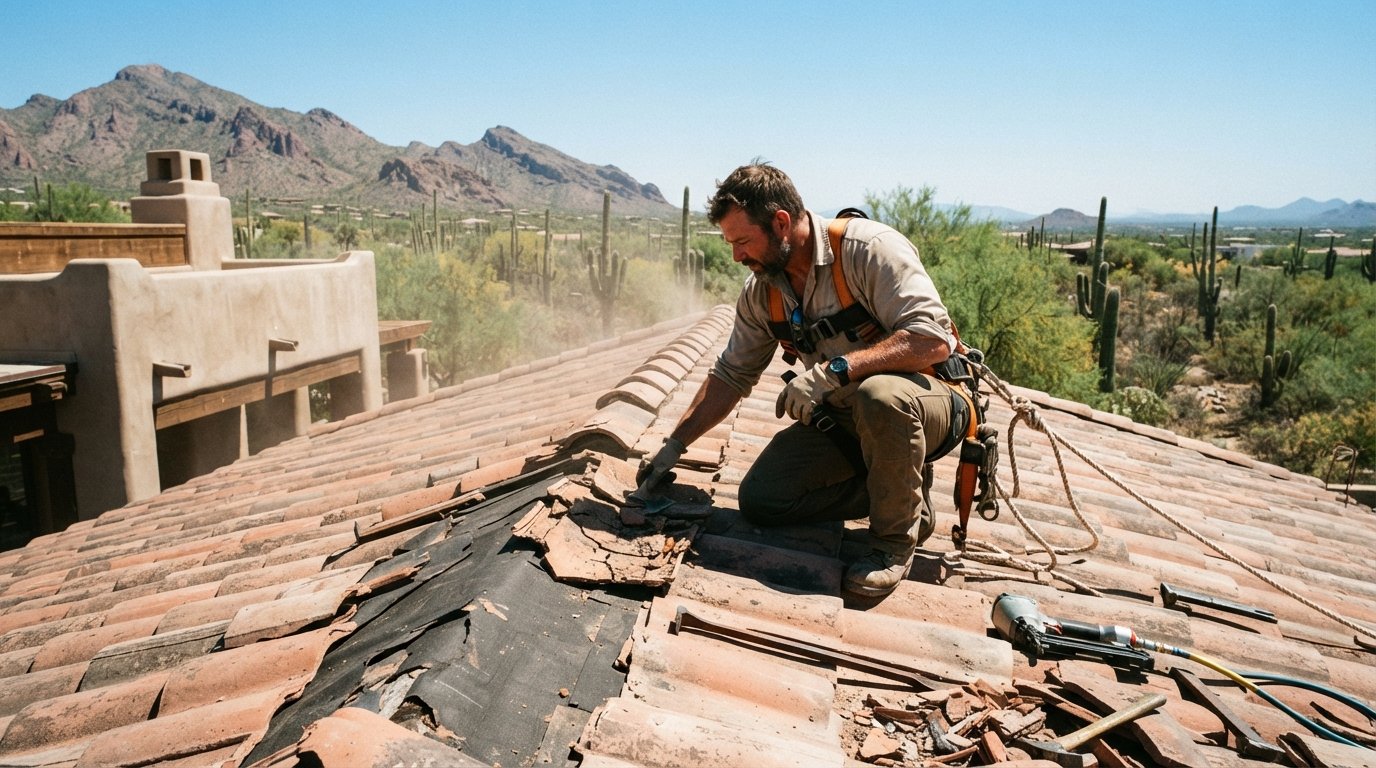
How to Find a Roofing Contractor in Phoenix Arizona
Find a reliable Phoenix roofing contractor with our guide. Call (833)-439-3727 for vetted pros who understand desert heat and monsoon damage.
By Adnan Nazir
Learn more about Roof Repair or Maintenance for guides, costs, and what to expect.
Compare Roof Repair or Maintenance Pros Near You

Enter your ZIP code to compare top-rated local professionals and request free quotes.
Phoenix roofs take a beating. From triple-digit summer heat that bakes asphalt shingles to monsoon microbursts that rip off tiles and hail that dents metal, your roof is under constant attack. When it fails, you need a contractor who understands desert roofing, not a generalist who treats your home like any other job. This guide walks you through how to find a roofing contractor in Phoenix Arizona who can handle the unique demands of the Sonoran Desert.
Why Phoenix Roofs Need Specialized Contractors
The Valley of the Sun is one of the harshest roofing environments in the country. Summer temperatures routinely exceed 110 degrees Fahrenheit, and roof surface temperatures can reach 160 degrees or more. That kind of heat causes asphalt shingles to dry out, crack, and lose their protective granules years ahead of schedule. Tile roofs, common in Phoenix, can crack under thermal expansion and contraction. Flat roofs, popular on mid-century homes, are prone to blistering and membrane failure when UV radiation breaks down the materials.
Then come the monsoons. From June through September, powerful storms roll in with wind gusts that can exceed 70 miles per hour, driving rain that finds every weak point, and occasional hail. A roof that looks fine in May can be leaking by July. Contractors who do not work in Phoenix regularly often underestimate how quickly monsoon damage can escalate, and they may not know which materials hold up best in this climate.
Beyond weather, Phoenix has specific building codes and licensing requirements that differ from other states. A contractor licensed in California or Texas cannot simply drive over and start work. You need someone who knows Arizona law, local permitting processes, and the practical realities of desert roofing. If you are also comparing options in other regions, our guide on how to choose top roofing contractors in Charlotte, North Carolina shows how regional factors change the selection process, but Phoenix has its own set of challenges.
Verify Arizona ROC Licensing and Insurance
In Arizona, roofing contractors must be licensed by the Arizona Registrar of Contractors (ROC). This is not optional. The ROC issues licenses for residential and commercial roofing, and it maintains a public database where you can check a contractor's status, complaint history, and bond information. Always verify the license number before you sign anything. A contractor who claims to be licensed but cannot provide a number is a red flag.
The ROC also requires contractors to carry a surety bond and general liability insurance. The bond protects you if the contractor fails to complete the work or violates certain laws. Liability insurance covers property damage or injuries that occur during the project. Ask for a certificate of insurance and call the insurance company to confirm the policy is active. Do not accept a photocopy that could be outdated or altered.
Workers' compensation insurance is another critical piece. If a roofer falls off your roof and the contractor does not have workers' comp, you could be held liable for medical bills and lost wages. Arizona law requires most employers to carry workers' comp, but some small operators try to skirt the rule by classifying workers as independent contractors. Ask for a certificate of workers' compensation insurance and verify it with the provider.
Here is a quick checklist for verifying a Phoenix roofing contractor:
- ROC license number and status (active, suspended, or revoked)
- General liability insurance certificate with current dates
- Workers' compensation insurance certificate
- Surety bond information (required by the ROC)
- Physical business address in Arizona (not just a PO box)
Once you have confirmed these basics, you can move on to evaluating the quality of their work and their understanding of desert roofing. A licensed contractor is the minimum, not the finish line.
Compare Multiple Phoenix Roofing Quotes for the Same Scope
Getting multiple quotes is standard advice, but the key is making sure every contractor bids on the exact same scope of work. Otherwise, you are comparing apples to oranges. A low bid might exclude tear-off, underlayment replacement, or flashing repair, leaving you with surprise costs later. A high bid might include unnecessary upgrades. The only way to know is to define the scope clearly and hold every contractor to it.
Start by having a roofer inspect your roof and document the damage or the areas that need replacement. Ask for a written scope that specifies:
- Square footage of roofing to be removed and replaced
- Type and brand of underlayment
- Type and brand of shingles, tiles, or membrane
- Flashing, vents, and pipe boots to be replaced
- Decking repair allowance (per sheet of plywood or OSB)
- Disposal and cleanup responsibilities
- Warranty terms for labor and materials
Give that scope to at least three contractors and ask them to bid on it. When the quotes come back, compare line by line. If one quote is significantly lower, find out why. Maybe they are using thinner underlayment or skipping the ice and water shield (which is less critical in Phoenix but still used in some areas). Maybe they are not pulling permits. Maybe they are not insured. The lowest number is rarely the best value.
Also ask how long the quote is valid. Material prices fluctuate, especially after a major storm when demand spikes. A quote that is good for 30 days gives you time to decide without pressure. A quote that expires in 48 hours is a sales tactic, not a service.
Local Questions to Ask Before Signing a Roofing Contract
Every roofing contract should include certain basics: the scope of work, the price, the payment schedule, the start and completion dates, and the warranty. But Phoenix-specific questions can reveal whether a contractor truly knows the local market. Ask these before you sign:
- How do you handle monsoon season scheduling? (You want a contractor who plans for weather delays and does not leave your roof exposed.)
- What underlayment do you recommend for Phoenix heat? (Look for synthetic underlayment with high UV resistance, not felt paper.)
- Do you pull permits from the city of Phoenix or Maricopa County? (Some contractors ask you to pull the permit, which shifts liability to you.)
- How do you protect landscaping and pool areas during tear-off? (Magnetic nail sweeps and tarping are standard for reputable companies.)
- What is your process for change orders? (You want written approval before any extra work is done.)
- Can you provide references from homeowners in my neighborhood? (Local references are more relevant than out-of-state ones.)
Also ask about the warranty. Manufacturer warranties cover materials, but labor warranties vary. A good contractor will offer a workmanship warranty of at least five years, and some offer ten. Get the warranty in writing and understand what voids it. For example, if you pressure-wash your roof or let another contractor walk on it, the warranty may be void.
Payment terms matter too. In Arizona, it is common to pay a deposit for materials, but never pay the full amount upfront. A typical schedule might be 10 to 20 percent deposit, then progress payments as milestones are met, with the final payment due after inspection and cleanup. If a contractor demands cash upfront or asks you to sign over an insurance check, walk away.
Use a Vetted Contractor Directory to Shorten Your Search
Finding qualified roofing contractors in Phoenix does not have to mean endless phone calls and door-knocking. A vetted directory can connect you with pre-screened professionals who serve your area. Homes.Contractors is a comprehensive online directory and informational resource for homeowners in the United States seeking qualified, pre-vetted contractors for home improvement and repair services. The site offers detailed service directories covering roofing, HVAC, plumbing, flooring, and bathroom remodeling, along with educational blog articles and a dedicated FAQ hub to guide decision-making.
For Phoenix homeowners, a directory like this can save hours of research. You can request multiple quotes for your roofing project without directly booking or fulfilling services, which means you stay in control of the selection process. The platform also features localized content and a ratings-by-state feature to connect you with contractors in your specific geographic area. If you are planning a larger renovation and want to explore other resources, PlanRemodel offers a similar directory model for home improvement projects across the country.
Even with a directory, you still need to verify licenses and insurance yourself. A directory is a starting point, not a substitute for due diligence. Use it to gather candidates, then run through the verification steps outlined above.
Red Flags to Avoid When Hiring a Phoenix Roofer
Storm chasers are a real problem in Phoenix after monsoon season. These out-of-state contractors flood the market, offer low prices, do shoddy work, and disappear before the warranty period begins. They often use high-pressure sales tactics, demand large upfront payments, and cannot provide local references. If a contractor shows up at your door uninvited after a storm, be skeptical.
Other red flags include:
- No physical address or only a PO box
- No ROC license number on the bid or contract
- Pressure to sign immediately for a discount
- Requests for cash payment or payment in full upfront
- No written contract or a contract with blank spaces
- No proof of insurance or workers' compensation
- Unwillingness to provide references
Trust your instincts. If something feels off, get another quote. A reputable contractor will welcome your questions and give you time to make a decision. They will also provide a written contract that clearly outlines the work, the price, and the timeline.
Prepare for the Long Term: Maintenance and Warranty
Once your roof is installed or repaired, you are not done. Phoenix roofs need periodic maintenance to reach their full lifespan. Extreme heat and UV exposure degrade materials over time, and small issues like cracked flashing or loose tiles can become major leaks if ignored. Ask your contractor about a maintenance plan. Some offer annual inspections that include clearing debris, checking seals, and tightening fasteners. These plans can extend the life of your roof and catch problems early.
Keep your warranty documents in a safe place. If you sell your home, the warranty may transfer to the new owner, which can be a selling point. If you need repairs later, you will want to know whether the work is covered. Most manufacturer warranties require professional installation and maintenance, so keep records of any inspections or repairs.
Finally, budget for future roof work. Even a well-installed roof will eventually need replacement. By planning ahead, you can avoid the stress of an emergency replacement and make a more informed choice when the time comes. The steps you take today to find a qualified Phoenix roofing contractor will pay off for years to come.
Learn more about Roof Repair or Maintenance for guides, costs, and what to expect.
Compare Roof Repair or Maintenance Pros Near You
Enter your ZIP code to compare top-rated local professionals and request free quotes.