
Home Energy Audit: What to Expect and How to Act on Results
A home energy audit reveals exactly where your house wastes energy. Call (833)-439-3727 to connect with vetted contractors and act on your results.

By Aaron Turner
Learn more about Weatherization for guides, costs, and what to expect.
Compare Weatherization Pros Near You

Enter your ZIP code to compare top-rated local professionals and request free quotes.
Your heating and cooling bills keep climbing, some rooms never feel comfortable, and you suspect the house is leaking energy somewhere. A home energy audit is the diagnostic tool that turns those suspicions into a prioritized action plan. But what actually happens during an audit, what does it cost, and how do you translate a dense report into smart spending? This guide walks you through the entire process, from the blower door test to the contractor bids that follow.
What a Home Energy Audit Actually Involves
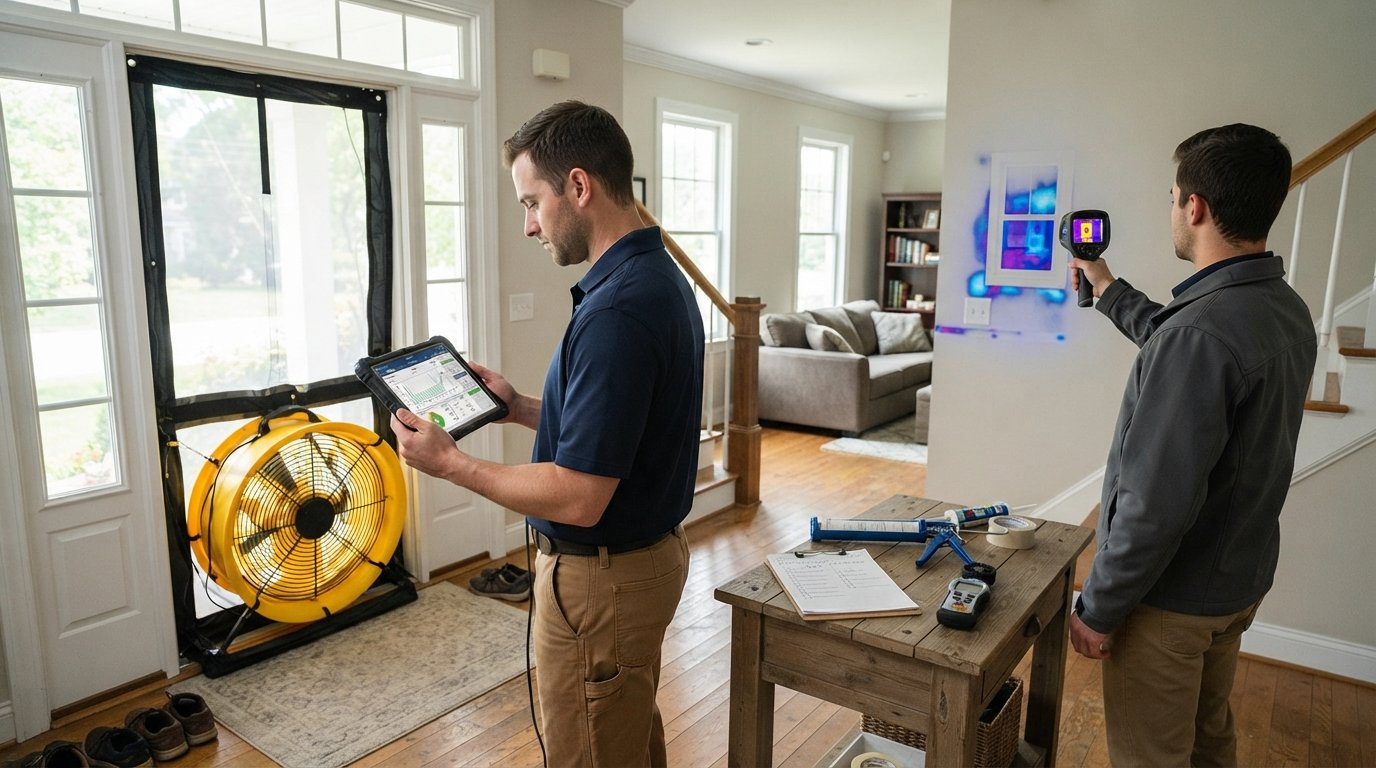
A professional energy audit is far more than a quick walk-through with a clipboard. A qualified auditor uses diagnostic equipment to measure how your house performs as a system. The two headline tests are the blower door test and thermal imaging, and understanding what each reveals helps you evaluate the report you receive.
The blower door test measures air leakage. A calibrated fan is mounted in an exterior doorway and pulls air out of the house, creating a pressure difference. The auditor then measures how much air rushes back in through gaps, cracks, and penetrations. The result is typically expressed in air changes per hour (ACH), and it tells you how drafty your envelope really is. Thermal imaging uses an infrared camera to scan walls, ceilings, and floors for temperature differences that reveal missing insulation, hidden air leaks, and even moisture problems. Together, these tools find problems you cannot see with the naked eye.
Beyond those two tests, a thorough audit usually includes a safety check of combustion appliances (furnace, water heater, stove) for carbon monoxide risks, an inspection of attic and crawlspace insulation levels, a review of window and door performance, and an examination of your HVAC equipment and ductwork. The auditor may also collect a year of utility bills to benchmark your usage against similar homes. Expect the visit to take two to four hours depending on house size and complexity.
Typical Audit Costs and How Rebates Offset Them
Out-of-pocket costs for a residential energy audit generally range from $200 to $500, with larger or older homes at the higher end. Some utilities offer free or heavily discounted audits, and many provide rebates that effectively cover part or all of the fee. Before you book, check your utility provider's website and your state energy office for current programs. Federal tax credits and local efficiency incentives may also apply to the recommended upgrades, not just the audit itself.
Think of the audit fee as a diagnostic investment. A single afternoon of testing can identify air sealing and insulation improvements that save hundreds of dollars annually, often paying back the audit cost within the first year. The key is to ask the auditor to quantify expected savings for each recommendation so you can compare them against the price of the work.
Reading the Report: Rank Fixes by Payback, Not by Hype
The most common mistake homeowners make after an audit is trying to do everything at once. A typical report lists a dozen or more recommendations, from cheap weatherstripping to a full HVAC replacement. Instead of treating the list as a to-do checklist, rank each item by simple payback: divide the installed cost by the estimated annual savings. The fastest paybacks usually cluster around air sealing and attic insulation, while big-ticket equipment replacements sit further out.
Here is a practical way to sort the recommendations you will receive:
- Quick wins (under $200, payback under two years): weatherstripping doors, sealing obvious gaps around pipes and outlets, installing smart thermostats, and swapping incandescent bulbs for LEDs.
- Mid-range envelope work ($500 to $3,000): air sealing the attic and rim joists, adding insulation to attics and crawlspaces, and sealing ductwork in unconditioned spaces.
- Major system upgrades ($4,000 and up): HVAC replacement, window replacement, and duct redesign, which usually have longer paybacks but improve comfort and may qualify for rebates.
After you rank the list, sequence the work logically. Air sealing and insulation should almost always come before HVAC replacement, because a tighter, better-insulated house may allow you to downsize the equipment you buy. Doing envelope work first can reduce the size, and cost, of the mechanical system you ultimately need.
DIY Weatherization vs. Licensed Contractor Work
Not every audit finding requires a professional. Simple weatherization tasks are well within reach for a handy homeowner: caulking around windows and doors, installing foam gaskets behind outlet covers, adding weatherstripping, and sealing accessible attic penetrations with caulk or spray foam. These small fixes often deliver a surprising share of the total savings and cost very little.
Other findings demand a licensed contractor. Any work involving combustion appliances, gas lines, electrical panels, or HVAC refrigerant must be handled by a credentialed professional for safety and code compliance. Attic insulation removal and replacement, duct sealing in tight spaces, and major air sealing that affects ventilation also warrant professional help. A good rule of thumb: if the fix touches a system that can cause fire, carbon monoxide, or structural problems, hire it out. For everything else, roll up your sleeves and start with the cheap stuff.
When you are ready to hire, treat the process like any other renovation. Ask detailed questions about licensing, insurance, and experience with energy upgrades, and get multiple bids before signing. Our guide on what questions to ask a contractor before hiring covers the essentials, from verifying credentials to understanding warranty terms.
How to Request Bids for Insulation, Air Sealing, and HVAC Work
Once you have a prioritized list, the next step is turning recommendations into competitive bids. Start by requesting quotes from at least three contractors for each major category: insulation, air sealing, and HVAC. Give each bidder a copy of the relevant audit findings so they are pricing the same scope. Ask them to specify materials, R-values, square footage, and whether they will perform pre- and post-testing to verify performance.
Be wary of contractors who dismiss the audit report or push a single expensive solution without addressing the envelope first. A reputable pro will explain how their work interacts with the rest of the house and will welcome verification testing. Many utility rebate programs require a post-installation blower door test, so confirm who is responsible for that step before you sign.
If you want to streamline the process, you can use a directory like PlanRemodel to find pre-vetted local contractors and request multiple quotes in one place. Compare bids line by line rather than by total price alone, and check that each contractor carries current liability insurance and workers compensation coverage. For HVAC work specifically, confirm the bid includes a manual J load calculation, not just a like-for-like equipment swap.
Turning Audit Findings into Long-Term Savings
The real value of a home energy audit is not the report itself but the actions that follow. After the priority upgrades are complete, schedule a follow-up blower door test to confirm the improvements delivered the expected airtightness. Keep your utility bills for the next twelve months and compare them to the prior year; this is the simplest way to verify savings and catch any recommendations that underperformed.
Finally, treat the audit as a living document. Revisit it every few years, especially before major renovations or HVAC replacements, because the best time to improve efficiency is when you are already opening walls or replacing equipment. A well-executed audit, paired with disciplined sequencing and competitive bidding, can cut energy waste significantly and make your home more comfortable in every season.
Ready to act on your audit results? Start by gathering three bids for the top-priority items, verify each contractor's credentials, and schedule the work in the order that maximizes savings first. Your wallet, and your comfort, will thank you.
Learn more about Weatherization for guides, costs, and what to expect.
Compare Weatherization Pros Near You
Enter your ZIP code to compare top-rated local professionals and request free quotes.