
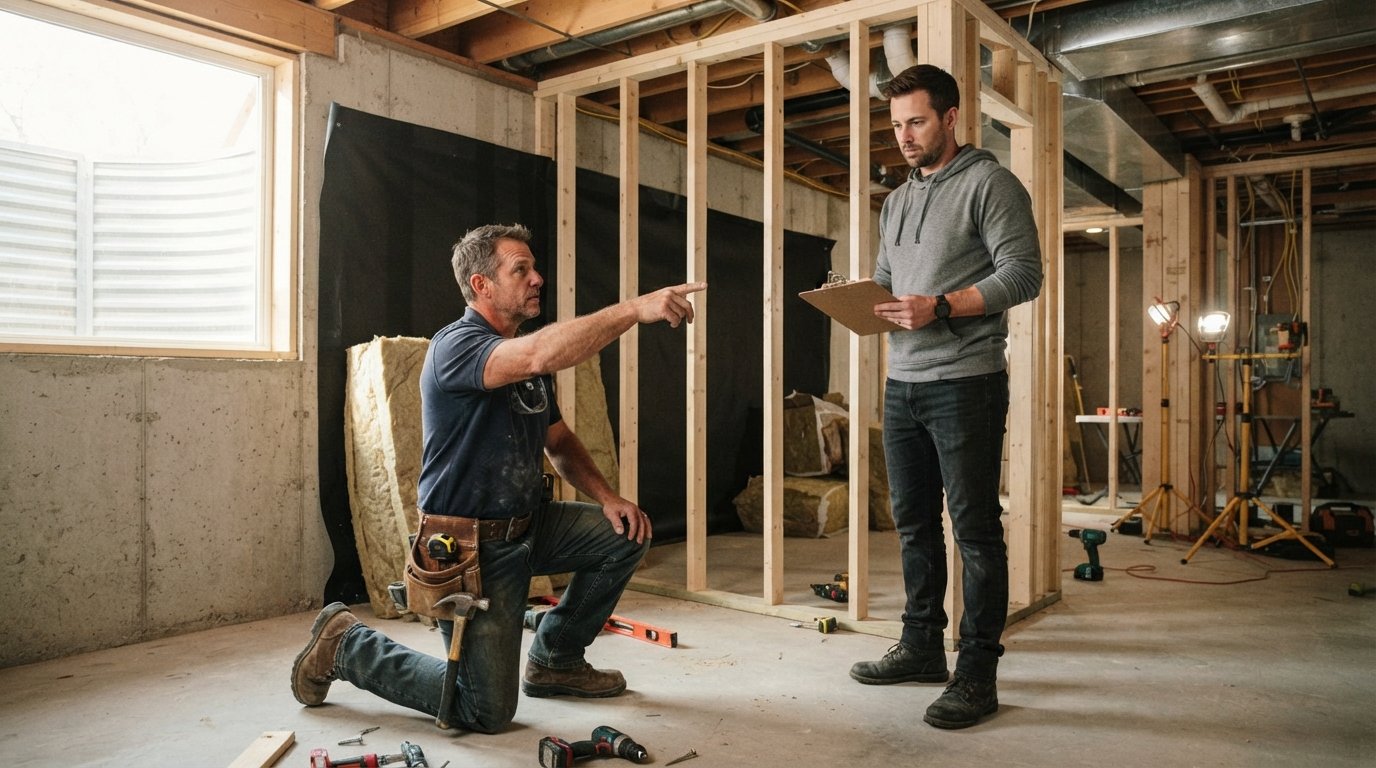
Hiring a Basement Finishing Contractor: Questions to Ask
Ask the right questions before hiring a basement finishing contractor. Call (833)-439-3727 for vetted pros and avoid costly moisture mistakes.
By Danica Leslie
Learn more about Basement Finishing or Remodeling for guides, costs, and what to expect.
Compare Basement Finishing or Remodeling Pros Near You

Enter your ZIP code to compare top-rated local professionals and request free quotes.
Finishing a basement is one of the smartest ways to add living space to your home, but it is also one of the most technically demanding renovation projects you can undertake. Unlike above-grade rooms, basements come with moisture, low ceilings, limited egress, and a host of code requirements that can trip up even experienced builders. That is why the questions you ask during the contractor interview process matter so much. The right questions separate a true basement specialist from a generalist who will learn on your dime. This guide gives you a practical script for hiring a basement finishing contractor questions to ask, covering everything from moisture control to payment schedules, so you can vet candidates with confidence and avoid costly surprises.
Why Basement Finishing Requires a Specialist Mindset
A basement is not just another room. It sits below grade, surrounded by soil that constantly pushes moisture and humidity against the foundation walls. Any contractor who treats a basement like a standard interior remodel is likely to deliver a space that smells musty within a year or develops mold behind the drywall. The best basement finishing contractors understand building science: how water moves, how air seals, and how to frame and insulate against concrete without trapping moisture.
Beyond moisture, basements have unique code constraints. Ceiling height often dictates which HVAC and plumbing strategies are viable. Egress windows are required in sleeping areas, and some jurisdictions require them in any habitable space. Electrical work must account for the damp environment, and permits are almost always required for framing, electrical, plumbing, and HVAC changes. When you are hiring a basement finishing contractor questions to ask should probe these specialist areas directly, because a vague answer here is a red flag.
Before you even start interviewing, it helps to understand how contractor quotes are structured and what a fair price looks like. Our guide on basement finishing contractor quotes breaks down line items, allowances, and hidden costs, so you can compare bids apples to apples.
Questions About Moisture, Waterproofing, and Framing
Moisture is the number one enemy of a finished basement. Ask every candidate how they assess water intrusion before framing begins. A good contractor will inspect the foundation walls, floor slab, and any existing cracks or seepage signs, and may recommend a waterproofing specialist if needed. They should also explain how they will handle vapor barriers, insulation, and framing to keep the assembly dry.
Here are the specific moisture-related questions to ask:
- How do you test for moisture in the concrete walls and slab before starting?
- What waterproofing or drainage steps do you take if you find seepage or high humidity?
- How do you frame against concrete walls, and what type of insulation and vapor barrier do you use?
- Do you use pressure-treated lumber at the bottom plates, and how do you create a capillary break?
- What is your approach to sealing rim joists and penetrations to prevent air leaks?
Listen for specifics. Answers like "we just use plastic sheeting" or "we have never had a problem" are not enough. A professional will reference products, methods, and local code requirements, and may suggest a dehumidifier or exterior drainage improvements if the site demands it. They should also be willing to put their moisture-control scope in writing, including who is responsible for pre-existing water problems.
Egress, Ceiling Height, and Layout Constraints
Egress windows are a life-safety requirement in most jurisdictions for any basement sleeping room, and some codes require them in all habitable spaces. Ask each contractor how they interpret egress rules for your area and whether they have experience cutting foundation walls for egress windows. This is a specialized task that involves structural considerations and may require engineering. A contractor who has not done it before may underestimate cost and complexity.
Ceiling height is another constraint that shapes every decision. Ductwork, plumbing drains, and beams often hang below the joists, leaving less headroom than you expect. Ask how they plan to handle low-clearance areas: will they reroute ductwork, use flush beams, or build soffits? How will that affect the layout and lighting plan? A thoughtful contractor will walk you through trade-offs and show you examples from past projects.
Other layout questions worth asking include how they will handle stairs, door swings, and window wells, and whether they will need to modify the foundation or framing. These details affect both cost and code compliance, so get clear answers before signing.
Subcontractor Use for Electrical, Plumbing, and HVAC
Most basement finishing projects require licensed electricians, plumbers, and HVAC technicians. Ask each general contractor whether they use in-house crews or subcontractors for these trades, and how they vet and supervise those subs. You want to know who will actually be doing the work and who is accountable for code compliance.
Specific questions to ask:
- Will you use licensed subcontractors for electrical, plumbing, and HVAC, and can I see their licenses?
- How do you coordinate scheduling among trades to avoid delays?
- Who is responsible for correcting failed inspections or code violations?
- Do you carry workers compensation and general liability insurance that covers subcontractors?
In many states, the general contractor is legally responsible for the work of its subcontractors, but that does not mean every GC manages them well. Ask how they handle quality control and whether the same subs will be on site throughout the project. Turnover among trades is a common cause of rework and delays.
Licensing, Insurance, and Permit Responsibility
Licensing and insurance are non-negotiable. Ask for the contractor's license number, verify it with your state or local licensing board, and confirm that their insurance covers basement finishing work. General liability insurance protects you if they damage your property, and workers compensation covers injuries on the job. If they cannot provide a certificate of insurance, walk away.
Permits are another critical area. Basement finishing almost always requires permits for framing, electrical, plumbing, and HVAC. Ask who will pull the permits and whether the cost is included in the bid. A contractor who suggests skipping permits to save money is putting you at risk: unpermitted work can complicate future home sales, violate insurance policies, and fail inspections. The permit process also provides an independent check on code compliance, which is valuable on a project with as many technical requirements as a basement finish.
If you are unsure how to verify credentials, a directory like PlanRemodel can help you find pre-vetted contractors and compare their qualifications before you interview them.
Change Orders, Payment Schedules, and Long-Project Management
Basement finishing projects often run for several weeks or months, and changes are almost inevitable once walls open up. Ask each contractor how they handle change orders: who approves them, how costs are documented, and how schedule impacts are communicated. You want a written change order process that requires your signature before work proceeds, not a verbal "we will add it to the bill" approach.
Payment schedules deserve equal scrutiny. A common and fair structure is a deposit for materials, followed by progress payments tied to milestones, with a final payment held until punch-list items are complete. Be wary of contractors who demand large upfront payments or full payment before the job is finished. Ask whether they use a written contract that specifies the payment schedule, and whether they will provide lien waivers from subcontractors and suppliers as payments are made. Lien waivers protect you from paying twice if a sub is not paid by the GC.
Finally, ask how they manage long projects: how often will you receive updates, who is your point of contact, and how are delays communicated? A contractor who cannot articulate a communication plan is likely to leave you guessing. For a project of this size, clear expectations about schedule, payments, and change management are just as important as the construction details.
Vetting a basement finishing contractor takes time, but the questions above will help you separate true specialists from generalists. Focus on moisture control, egress and ceiling constraints, subcontractor management, licensing and permits, and financial practices. When you are hiring a basement finishing contractor questions to ask should be specific, and the answers should be detailed and documented. Take notes, check references, and trust your instincts: a contractor who welcomes these questions is usually the one worth hiring.
Learn more about Basement Finishing or Remodeling for guides, costs, and what to expect.
Compare Basement Finishing or Remodeling Pros Near You
Enter your ZIP code to compare top-rated local professionals and request free quotes.