
Emergency Water Leak Repair: A Homeowner's Action Plan
A practical homeowner guide to handling emergency water leaks, from quick response steps to insurance claims and permanent repairs.
By Danica Leslie
Learn more about Emergency Plumbing for guides, costs, and what to expect.
Compare Emergency Plumbing Pros Near You

Enter your ZIP code to compare top-rated local professionals and request free quotes.
Water leaks are among the most stressful and potentially destructive emergencies a homeowner can face. When a pipe bursts at 2 a.m. or a supply line under the kitchen sink starts spraying, every minute counts. The difference between a manageable cleanup and a major restoration project often comes down to how quickly and effectively you respond. This comprehensive Emergency water leak repair homeowner guide will walk you through the immediate steps to take, the tools you need, and the smart decisions that protect both your home and your finances. With a clear plan, you can reduce damage, avoid costly mistakes, and navigate the repair process with confidence.
Your First Five Minutes: The Critical Response Protocol
When water is actively leaking, you may have only a few minutes to minimize damage. Your primary goal is to stop the water flow and protect your belongings. Acting swiftly and methodically is key. Do not panic; instead, work through this sequence to bring the situation under control. The steps below are designed to be performed in order, but if you cannot complete one safely, move to the next and call for help.
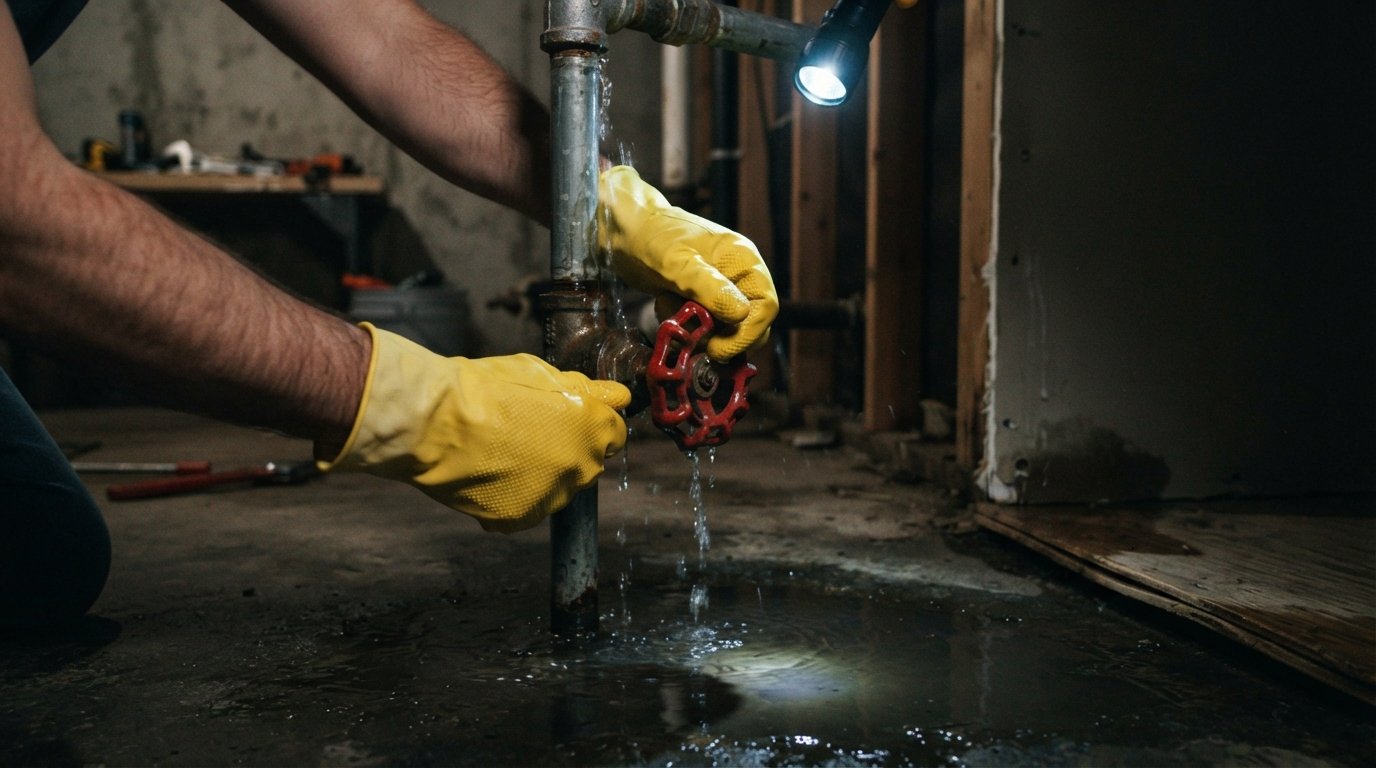
- Turn off the water. Locate your home's main water shut-off valve, usually near the water meter or where the main line enters the house, and turn it clockwise to close it. If the leak is isolated to a sink or toilet, close the fixture's own shut-off valve, typically located under the sink or behind the toilet.
- Shut off the electricity. If water is near any electrical outlets, appliances, or your electrical panel, go to your circuit breaker and turn off power to the affected areas. Water and electricity are a deadly combination, so err on the side of caution.
- Remove or cover valuables. Quickly move furniture, electronics, rugs, and other items out of the water's path if possible. For items that cannot be moved, cover them with plastic sheeting or tarps to protect them from moisture.
- Start removing standing water. Use a mop, towels, or a wet/dry vacuum to remove as much water as you can. The faster you extract water, the less time it has to seep into floors, walls, and baseboards. If you have a sump pump, ensure it is operating.
- Document the damage. Take photos and videos of the leak, the affected areas, and any damaged property. This evidence will be crucial for insurance claims and for contractors to assess the full scope of the work needed.
Once you have stopped the active leak and begun cleanup, you can shift from emergency mode to a more deliberate assessment phase. Remember that even after the water is shut off, moisture remains trapped in building materials, which can lead to mold and structural decay if not properly dried. Professional water extraction and drying services are often necessary to prevent secondary damage.
Assessing the Damage and Deciding on Professional Help
After the immediate crisis is over, you need to evaluate the extent of the damage. Some leaks are minor and can be handled with a simple pipe patch or a new washer. Others, such as flooding that has soaked drywall, insulation, and flooring, require professional intervention. Consider these factors when deciding whether to call in a professional or attempt a DIY repair.
Ask yourself about the source of the leak. Is it a leaking pipe joint, a crack in a pipe, or a problem with an appliance? A leaking joint might be fixed by tightening it or replacing the seal. A cracked pipe often requires replacing a section. Leaks behind walls or under concrete slabs are far more complex and usually demand professional plumbing expertise to diagnose and fix properly. Likewise, if the water has contaminated areas with sewage or chemicals, you need a specialized restoration team for safety reasons.
Another critical consideration is the potential for hidden damage. Water travels along paths of least resistance, so it can pool in places you cannot see, like inside wall cavities or under flooring. A professional water damage restoration company has moisture meters and thermal imaging cameras to detect hidden pockets of moisture. They also have industrial-grade dehumidifiers and air movers to dry out structures thoroughly. Attempting to dry these areas with household fans often fails, leading to mold growth and wood rot over time.
For structural repairs, such as replacing drywall, insulating, or refinishing hardwood floors, you will likely need a general contractor or a specialized flooring installer. In our guide on expert roof leak repair services, we explain how to choose a qualified professional for similar types of water damage restoration, which can give you a framework for vetting contractors for your specific leak damage. In any case, if the damage is more than superficial, or if you are unsure about the source of the leak, investing in a professional inspection is a wise move that can save you from much larger bills down the road.
Emergency Leak Repair Kits and Temporary Fixes
While waiting for a professional plumber or restoration crew to arrive, you may need to apply a temporary fix to stop or slow a leak. However, it is important to understand that these are stopgap measures, not permanent solutions. They are designed to reduce immediate water flow and prevent further damage until the real repair can be made. Always shut off the water to the affected area if you can, as this is the safest and most effective way to stop a leak.
Several products are designed for emergency pipe repairs. Pipe repair clamps, also known as pipe repair couplings, are metal sleeves with a rubber gasket that you place over the damaged section and tighten with screws. They work well on small cracks or pinhole leaks in straight sections of pipe. Epoxy putty is another quick fix; you knead it to activate the resin, then press it firmly over the leak, smoothing it into the crack. It hardens in minutes and can withstand some water pressure. For larger ruptures, you might use a pipe repair tape, which is a self-fusing silicone tape that wraps around the pipe to create a watertight seal.
Here is a list of essential items to keep in your home emergency kit to handle unexpected leaks:
- Various sizes of pipe repair clamps and couplings
- Epoxy putty that is suitable for plumbing repairs
- Self-fusing silicone tape or pipe wrap tape
- A pipe cutter or hacksaw to remove damaged sections
- An adjustable wrench and a pipe wrench
- A bucket, heavy-duty towels, and a wet/dry vacuum
These tools and materials can provide a temporary seal that holds until a professional can make a permanent repair. For instance, if a joint under the sink is leaking, you can use a clamp or epoxy to reduce the drip while you wait for a plumber. Remember, these are not meant to be long-term solutions. A temporary fix can fail without warning, so it is crucial to schedule a professional repair as soon as possible. The plumber will likely recommend replacing the damaged pipe section or fitting to ensure the integrity of your plumbing system.
Navigating Insurance Claims and Mitigating Costs
After a significant water leak, you will likely need to file a claim with your homeowners insurance. Understanding your policy and documenting everything properly can significantly affect your claim's outcome. The damage caused by a sudden, accidental leak, such as a burst pipe, is typically covered by standard homeowners policies. However, damage from long-term leaks or neglect, like a slowly dripping pipe that rots a cabinet, is often excluded. It is important to review your policy details and contact your insurance provider as soon as possible to report the incident.
Before you call your insurer, gather all the documentation you have created: photos, videos, lists of damaged items, and any receipts for emergency repairs or temporary housing. Also, keep any receipts for materials you purchased for temporary fixes. When you speak with your insurance adjuster, be clear about the cause of the leak and the extent of the damage. They will likely schedule an inspection of the property to assess the claim.
One of the most effective ways to maximize your insurance recovery is to get multiple professional estimates for the repair work. Insurance companies typically base their payout on the cost of repairs in your area. Having a detailed, itemized estimate from a licensed contractor can help you negotiate a fair settlement. You can use platforms like FreeQuotes.Contractors to connect with pre-vetted contractors who can provide thorough quotes for your specific repair needs. This process not only gives you leverage with your insurance company but also helps you understand the true scope of the work and avoid surprise bills later. By comparing estimates, you can ensure that you are not underpaid for the structural repairs, mold remediation, or content restoration that may be necessary.
Moreover, be proactive in preventing further damage. Your insurance policy likely has a clause about taking steps to protect your property after a loss. This means you are responsible for making temporary repairs, such as covering a hole in the roof or shutting off the water, to prevent additional damage. If you fail to do so, your insurer may deny part of your claim. Always document these mitigation efforts, as they show your diligence and can be included in your claim.
Preventing Future Leaks: Maintenance and Upgrades
Once the immediate emergency is resolved, it is wise to think about preventing the next one. While you cannot predict every pipe failure, regular home maintenance can catch small issues before they become catastrophic. Simple tasks like inspecting visible pipes for signs of corrosion, checking under sinks for moisture, and monitoring your water bill for unexplained increases can help you spot problems early. A sudden spike in your water usage often indicates a hidden leak.
Consider installing modern leak detection devices. Smart water shut-off valves, which monitor water flow and automatically shut off the water if they detect an abnormal pattern, are increasingly popular. These systems can alert you to leaks on your smartphone, even when you are away from home, and can prevent extensive water damage. For a more budget-friendly option, simple moisture sensors placed near water heaters, washing machines, and under sinks can sound an alarm when they detect dampness, giving you an early warning.
Another key preventive measure is to know the age of your home's plumbing. If your home is older than 40 years, it may have galvanized steel or polybutylene pipes, both of which are prone to corrosion and failure. In such cases, repiping your home may be a worthwhile investment. While this is a significant project, it can prevent the kind of emergency that leads to extensive water damage and high insurance claims. Additionally, regularly check your water heater, as sediment buildup can cause it to leak or fail. Flushing the tank annually can extend its life and reduce the risk of leaks.
By taking these proactive steps, you are not just protecting your home; you are also saving money on potential repairs and insurance deductibles. The cost of a minor maintenance task is far less than the cost of an emergency water leak repair. As you implement these strategies, you will be better prepared to handle any future incidents with confidence, knowing that you have taken every reasonable step to safeguard your property.
Dealing with an emergency water leak is never easy, but with the right information and resources, you can manage the crisis effectively. From the initial response to the final repair, your decisions will influence both the immediate outcome and the long-term health of your home. Remember to act quickly, prioritize safety, document everything, and engage qualified professionals when needed. By applying the guidance in this Emergency water leak repair homeowner guide, you are taking a crucial step toward protecting one of your most valuable assets. After the repair is complete, you can breathe easier, knowing that you have the knowledge to handle whatever comes your way.
Learn more about Emergency Plumbing for guides, costs, and what to expect.
Compare Emergency Plumbing Pros Near You
Enter your ZIP code to compare top-rated local professionals and request free quotes.