
Effective Communication With Your Contractor During a Renovation
Master effective communication with your contractor during a renovation to avoid surprise bills and delays. Call (833)-439-3727 for vetted local pros.
By Adnan Nazir
Learn more about General Contracting for guides, costs, and what to expect.
Compare General Contracting Pros Near You

Enter your ZIP code to compare top-rated local professionals and request free quotes.
You have signed the contract, the dumpster is in the driveway, and the framing is going up. This is the moment when your renovation either becomes a well-managed partnership or a daily source of stress. The difference often comes down to one skill that nobody teaches in school: effective communication with your contractor during a renovation. Homeowners who establish clear channels, document decisions, and address problems early consistently report smoother projects, fewer surprise costs, and stronger finished results. Those who rely on casual hallway conversations and verbal promises often find themselves frustrated, over budget, and unsure who said what. This guide gives you a practical system for staying informed, protecting your investment, and keeping the working relationship positive from demolition day to final walkthrough.
Set the Rhythm: Weekly Check-Ins and a Single Point of Contact
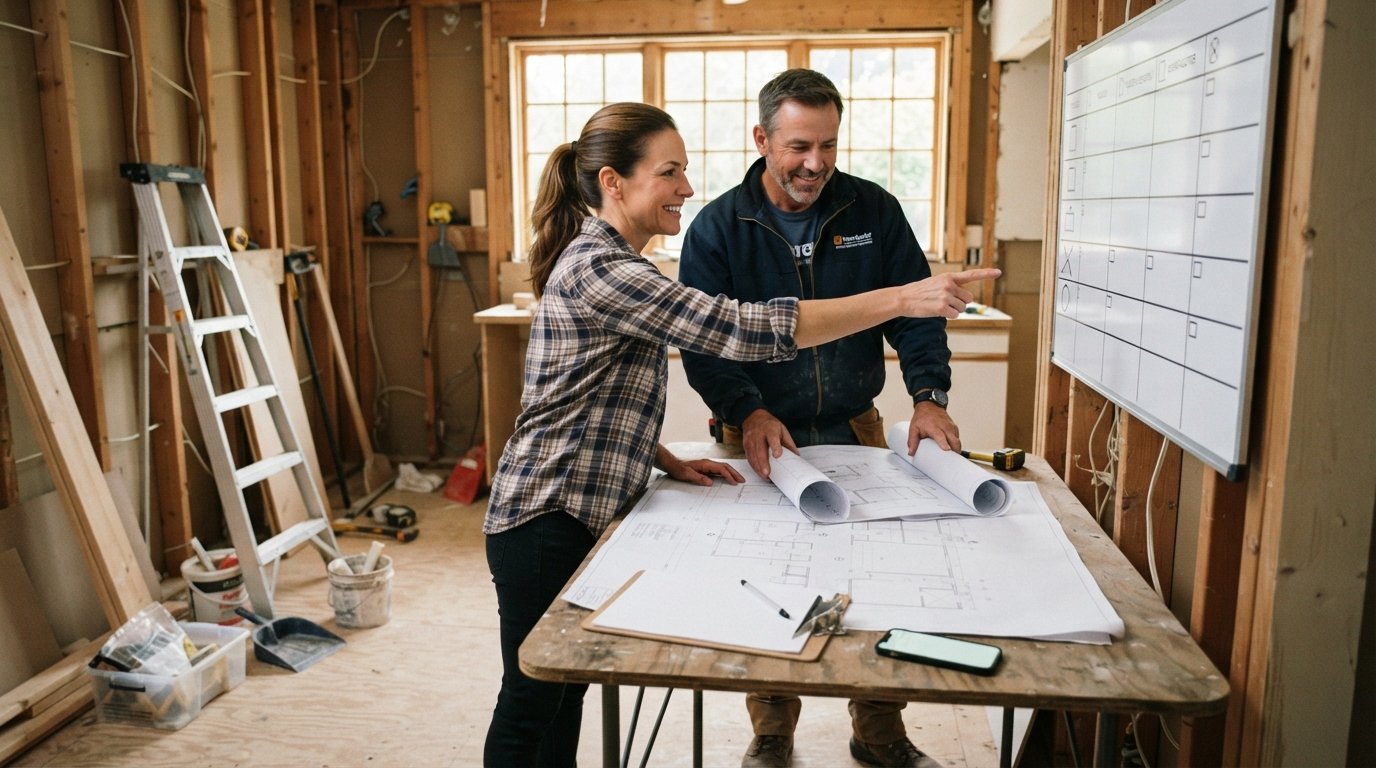
Renovations move quickly, and information can slip through the cracks when updates arrive haphazardly. One of the most reliable habits you can build is a standing weekly check-in with your contractor. Pick a day and time, keep it short (20 to 30 minutes is plenty), and treat it as a non-negotiable appointment. This cadence gives both sides a predictable forum to review progress, flag upcoming decisions, and confirm the schedule for the week ahead. It also reduces the temptation to fire off anxious texts at all hours, which can strain even the most patient builder.
Equally important is agreeing on a single point of contact. On larger jobs, your contractor may have a project manager, a lead carpenter, and a scheduler. Decide in advance who you should call or email for what. Typically, the project manager handles schedule and quality questions, while billing and contract changes go through the owner or office manager. If you are unsure who to ask, ask your contractor directly: "Who is my main contact for day-to-day questions, and who do I reach if there is an urgent issue after hours?" Write the answer down and share it with anyone else in your household who might need it.
During the check-in, use a simple agenda to keep things productive. A short list like the one below can prevent the meeting from turning into a rambling conversation:
- Progress since last week and what is planned for the next seven days
- Upcoming decisions or selections you need to make (and by when)
- Any changes, delays, or cost impacts on the horizon
- Open questions from either side that need a resolution
After the meeting, send a brief summary email to your contractor confirming what was discussed. This does not need to be formal, but it creates a written record that both parties can reference. If a disagreement arises later about when a decision was made or what was promised, that email trail becomes invaluable. For homeowners who want to avoid the common trap of a project drifting over budget, understanding how to handle a contractor who goes over budget starts with exactly this kind of proactive communication.
Document Changes in Writing, Not With a Handshake
Verbal agreements are the single biggest source of renovation disputes. You mention that you would like to add an outlet on the kitchen island, your contractor nods and says it should be no problem, and three weeks later you receive an invoice for several hundred dollars you did not expect. From the contractor's perspective, that outlet required extra wire, a new breaker, and an hour of labor that was never in the original scope. From your perspective, you thought it was a minor tweak included in the price. Both sides are acting in good faith, but without a written change order, the relationship can sour quickly.
Establish a rule at the start of the project: no change happens without a written change order signed by both parties. A proper change order should include a description of the work, the reason for the change, the cost impact (including materials and labor), and any effect on the schedule. It does not need to be a legal document prepared by an attorney. A one-page form or even a detailed email with a clear confirmation reply can work, as long as both sides acknowledge the terms before work proceeds. Ask your contractor how they prefer to handle change orders, and follow their process consistently.
This discipline protects you in several ways. It prevents surprise charges, it gives you a chance to decide whether a change is worth the cost, and it keeps the project scope transparent. It also protects your contractor, who can point to signed documentation if a homeowner later claims a change was included in the original bid. When you need to make a decision quickly, a short text message asking "Can you send me a change order for that?" is enough to keep the process moving without slowing down the job. The goal is not bureaucracy; it is clarity.
Raise Concerns Early Without Damaging the Relationship
Every renovation has moments when something does not look right, a timeline slips, or a finish is not what you envisioned. The instinct for many homeowners is to stay quiet and hope it resolves itself, or to wait until frustration boils over and then confront the contractor. Neither approach serves you well. Effective communication with your contractor during a renovation means addressing concerns while they are still small and easy to fix.
Timing and tone matter. Bring up issues during your weekly check-in when possible, or send a calm message describing what you observed and asking for clarification. Use neutral language: "I noticed the tile in the hallway does not seem to line up with the pattern we discussed. Can we take a look together?" This invites collaboration rather than accusation. If the issue is urgent, such as a safety concern or water where it should not be, call immediately. Contractors generally prefer a homeowner who speaks up early over one who stays silent and then expresses anger at the end.
It also helps to separate preferences from problems. A preference is something like the shade of grout, which can often be adjusted with minimal cost. A problem is a structural issue, a code violation, or work that does not match the approved plans. Save your strongest pushback for genuine problems, and be flexible on preferences when the cost or schedule impact is significant. This balance builds credibility, so when you do raise a serious concern, your contractor knows it is worth immediate attention. If a concern escalates, refer back to your contract and the written record you have built. Most issues can be resolved with a conversation, but having documentation gives you leverage if the discussion stalls.
Photo Documentation and Progress Logs That Protect Both Sides
Photos are worth more than a thousand words in a renovation, especially when they are dated and organized. Make it a habit to photograph the job site at least once a week, ideally at the same time as your check-in. Capture wide shots of each room and close-ups of any work that will be covered up later, such as plumbing rough-in, electrical wiring, and insulation. These images serve as a record of what was done and when, and they can be invaluable if a question arises months or years later about how something was installed.
Ask your contractor to do the same. Many professionals already take daily photos for their own records. If they do, ask if they can share them with you through a shared folder or a project management app. This transparency builds trust and gives you a visual timeline of progress. You can also keep a simple progress log, either in a notebook or a spreadsheet, noting the date, what work was completed, and any decisions made. This log does not need to be elaborate; a few lines per week is enough to create a useful reference.
Documentation also helps when you need to communicate with third parties. If you are working with an insurance company, a lender, or a home warranty provider, a clear record of progress and changes can support your case. And if you ever need to bring in an inspector or another professional to evaluate the work, your photos and logs provide context that would otherwise be lost. For homeowners planning a major project, it also helps to understand the full scope of what can go wrong and how to prepare. Resources like PlanRemodel offer directories of pre-vetted contractors and educational guides that can help you set expectations before the first hammer swings.
Escalation Paths When Communication Breaks Down Mid-Project
Even with the best systems in place, communication can break down. Maybe your main contact stops returning calls, or a disagreement about quality turns into a standoff. When that happens, having a pre-agreed escalation path keeps the project from derailing. At the start of the job, ask your contractor what their process is for resolving disputes. A professional company should be able to explain how issues move from the project manager to a supervisor or owner, and what timeline you should expect for a response.
If you cannot get a satisfactory answer from your day-to-day contact, escalate politely but firmly. Send a written message to the owner or office manager summarizing the issue, the steps you have already taken, and what outcome you are seeking. Keep the tone factual and professional. Avoid threats or emotional language, which can harden positions. If the issue involves a potential safety hazard or a code violation, you may need to contact your local building department or a licensed inspector. This is a serious step, but it is sometimes necessary to protect your home and your investment.
In the most difficult cases, you may need to involve a mediator or an attorney. Before you reach that point, review your contract for any dispute resolution clauses, which may require mediation or arbitration before litigation. Also, check whether your contractor is licensed and bonded, and whether your state offers a recovery fund for homeowners who have been harmed by licensed contractors. These resources exist to protect consumers, but they are far easier to use when you have maintained clear records and open lines of communication throughout the project.
Finally, remember that most contractors want the same thing you do: a successful project and a happy client. Communication breakdowns are often the result of mismatched expectations or simple misunderstandings, not bad intentions. By setting a rhythm, documenting changes, addressing concerns early, and knowing your escalation options, you turn effective communication with your contractor during a renovation into a practical tool that keeps your project moving forward and your stress level under control.